

In TrainingPeaks it is important to have accurate functional threshold values so that your training stress and fitness can be tracked. You can find out more about the importance of…
Read More

The principle of Yin and Yang is that all things exist as inseparable and contradictory opposites, for example, female-male, dark-light and old-young. The principle, dating from the 3rd century BCE or even earlier, is a fundamental concept in Chinese philosophy and culture in general.
In training we break our bodies down, we intentionally create physical and mental stress. In recovery the evolutionary process takes over and your body and mind super compensate and adapt, getting stronger. All you need to do is give it a little window of time and the raw material of nutrients.
Most athletes have a strong focus on getting the formula of training right, aerobic training, high intensity, strength, durability, even weigh management. Few really focus on recovery which is where the magic happens.
Good recovery discipline ensures you convert your investment and effort into benefits. I see the as the third most common mistake made by novice athletes behind 1.) not enough easy miles, and 2.) high intensity sessions not being hard enough.
My top 5 recovery tips:

This one is for those riding to power, specifically racing to power. The secret is to focus on the process, not the outcome. To do this we need the numbers for the moment we are in, our physiological inputs and outputs.
Many set-up their Garmin to show speed, distance and time, metrics that re-enforce outcome targets, not process.
With power and heart rate metrics we have the capability to focus on process.
My recommended setup is to show 4 metrics on the main screen, and optionally some others on a second screen.
The primary screen I show Power 3 second average, Intensity Factor, Heart Rate and Cadence.
Power – 3 second average: The power reading jumps up and down and is hard to monitor, to judge intensity I prefer to monitor Intensity Factor. The power is useful, however, to monitor power cap and minimums. The power lets me know if I am pushing too hard on a climb and into headwind or too soft heading down wind and down a gradient. In an IRAONMAN my cap is 230 maximum and a minimum of 130 watts, I keep within these unless the hill is extreme.
Intensity Factor: The IF shows the average intensity factor over the course of the ride. My target over an IRONMAN is 0.72, in a 70.3 it is 0.85. This is individual, however the general range to allow for a good run is in a range of 0.70 to 0.75 where 0.70 for a 6 hour ride and 0.75 for a 5:10 ride. The IF allows me to adjust intensity without constantly monitoring power, and adjusting to periods of over power (early hills) and under investment (tail winds).
Heart Rate: Heart rate is the input which should also be monitored. Generally I ride to power (IF and Power 3s) but I monitor Heart Rate which will react to other stresses like heat, humidity, GI issues or unforeseen illness. Essentially if the HR shoots up well above aerobic for IRONMAN, or into Zone 4 for 70.3, I slow down regardless of power.
Cadence: Cadence is good to monitor as it can be an early indicator of fatigue. If it drops unexpectedly then it may be an indication you need to fuel up or back off.
On my second screen, just in case I get inquisitive, I have distance, time and Normalised Power. I rarely look at these.
What I don’t have displayed or available anywhere is Speed. Speed is the outcome of power, gravity and headwind. Not worth monitoring as it could make you invest effort badly. For example at IRONMAN New Zealand last year I averaged 40 km per hour for the 15 km section heading out of Taupo. Had I seen the speed I would have doubted myself and backed off. The section was slightly downhill and had a tailwind. I recall having to concentrate to keep my power up to 140 watt, 15 watts below my NP target,
because it felt fast. Speed is irrelevant, inputs and outputs are what counts.

Episode 10 is now live – I was blessed to be able to have legendary endurance coach Paul Skelton on the show. With years of experience as both a coach and an athlete Paul shares a tremendous amount of his wisdom throughout the show.
Tune in here: https://anchor.fm/easythrills

As a coach I generally see three categories of athletes, coaches can pick these and tailor coaching, athletes would benefit from acknowledging where they sit.
Yes there are others in between. Here are some points to get the best results as a coach and athlete.
Which one are you? It’s all about getting outcomes within your desired lifestyle! Step one is to design your desired lifestyle and make your sport part of it! Mastering yourself is true power, not knowing what you want, or not seeking knowledge on how to get there are equal weaknesses! Go get it with flexible and adaptable plan!
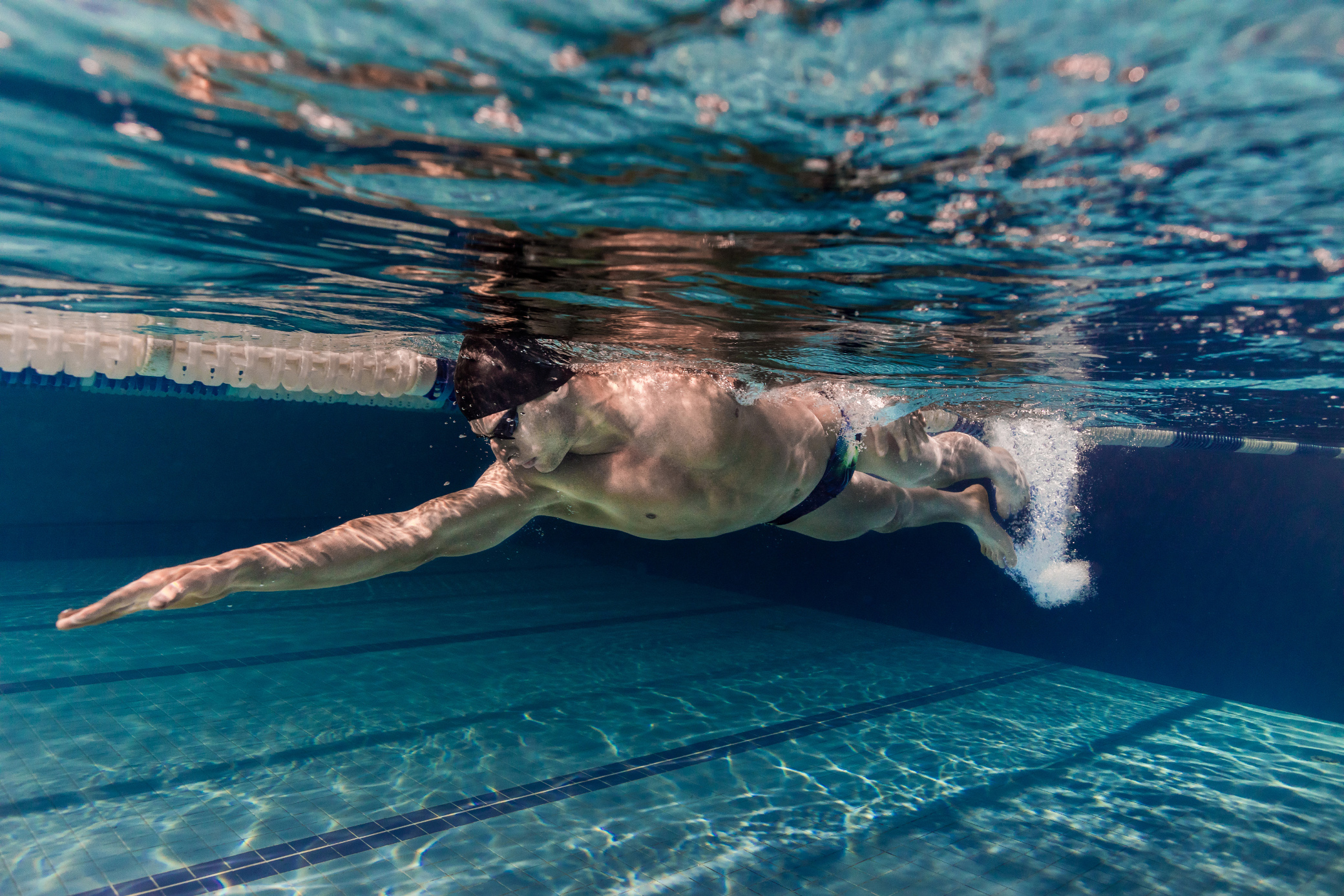
Many triathlete never reach their swimming potential due to sinking hips and legs. Our program resolves this quickly and effectively with noticeable differences after the initial 90 minute session. Read More
Do you have a fear you would like to conquer? This is a heart warming story about overcoming fear. It also shows that the kaizen approach used by Total immersion swimming can, not only ease you through the process, but ensure the focus on confidence, technique and efficiency lead to phenomenal progress and results. Love this story!
Total Immersion is hands on coaching, we are with you, in the water, in heart, reshaping perception, remodeling your stroke.

The Story Of A Woman Who Survived A Family Tragedy And Went On To Defy The Odds

 Improve your swimming, suited for those struggling to make a length and the experienced swimmer wanting to reach the next level. Read More

The primary cause for fatigue is usually doing too much volume and/or intensity too early in a fitness or performance program. We need to progressively build both, over weeks, to our target race levels.
I frequently come across athletes who get fatigue early on, where neither volume or intensity are the issue. These athletes have taken the right steps but still get real fatigue stopping or inhibiting their training and progress. Here are some possible causes. Read More
